What Are Preschool Courses?
Definition and Background
Preschool courses are educational programs designed for children aged 3 to 6, with the goal of promoting their cognitive, social, emotional, and physical development. The primary purpose of preschool education is to provide children with a diverse learning environment, help them develop an interest in learning, and prepare them for formal schooling.
What Are "Preschool Courses"?
Preschool courses are educational programs designed for young children. The curriculum covers a variety of foundational skills, focusing primarily on language, mathematics, social skills, and basic self-care abilities, with the goal of building a strong foundation for children's future learning.
The Development and Importance of Preschool Education
As educational concepts have evolved, preschool education has received increasing attention. Many studies indicate that the preschool stage is crucial to children's cognitive and emotional development. This stage not only supports brain development but also helps children develop the ability to cooperate and communicate with others.
Goals of Preschool Courses
- Help children develop basic cognitive, social, emotional, and physical skills: Including language development, basic mathematics, emotional management, and more.
- Develop an interest in learning and basic life skills: Help children build enthusiasm for learning through an enjoyable learning process while developing basic self-care skills such as dressing and eating independently.
Core Content of Preschool Courses
Cognitive Development
- Basic language and mathematical skills, such as language comprehension and number recognition: Language comprehension and number recognition are important parts of preschool courses, and these skills contribute to children's future learning and development.
- Improving cognitive abilities through understanding shapes, colors, sizes, and more: Activities and games help children understand basic shapes, colors, and sizes, thereby improving their cognitive abilities.
Social and Emotional Development
- Basic social skills and emotional expression, including cooperation, sharing, and emotional regulation: Preschool courses emphasize cooperation and sharing, allowing children to learn how to build relationships with others and manage their emotions through interaction.
- Encouraging empathy and emotional development: Interaction with children of the same age helps develop empathy, allowing children to understand the emotions of others and respond appropriately.
Physical Development
- Gross and fine motor coordination training, such as running, jumping, and drawing: The key to physical development in preschool children is the coordination of gross and fine motor skills. These activities help improve children's movement abilities and physical control.
- Self-care and daily living skills, such as dressing and eating: Teaching children basic self-care skills helps improve their independence and self-confidence.
Teaching Methods for Preschool Courses
Game-Based Learning
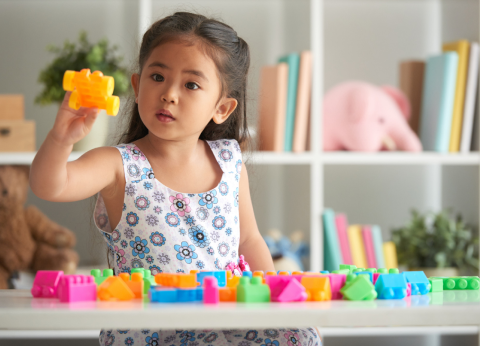
Promoting learning and skill development through games: Game-based learning is an effective teaching method. Through activities such as role-playing, construction games, music, and dance, children can learn basic skills such as logic and language in a relaxed and enjoyable environment.
Exploration and Practice
Encouraging children to explore independently and stimulate curiosity: Preschool education should encourage children to actively explore the world and develop their curiosity. Providing opportunities for exploration, such as art activities and nature exploration, helps children learn how to solve problems.
Scenario-Based Learning
Learning through real or simulated situations, such as role-playing stores or family scenarios: Scenario-based learning allows children to apply what they have learned in real or simulated everyday situations, making learning more practical and enjoyable.
Teaching Materials and Resources for Preschool Courses
Selecting Teaching Materials
Designing teaching materials according to children's ages and developmental stages: Teaching materials should match children's age characteristics and developmental needs. For preschool children, simple, visual, and engaging materials should be selected to support learning.
Selecting Picture Books, Learning Tools, Music, and Other Materials
Learning materials such as picture books, music, and educational tools can stimulate children's interest in learning and help improve their language skills and mathematical thinking.
Multimedia Resources
Videos, interactive apps, games, and other supplementary learning resources: Modern technology provides more learning resources for preschool education. Videos, interactive applications, and other tools can make learning more vivid while increasing interactivity and enjoyment.
Assessment and Feedback in Preschool Courses
Developmental Assessment
How to conduct developmental assessments based on children's ages and abilities: Assessments should be based on children's ages and developmental stages, with attention given to their progress in language, mathematics, social skills, and other areas.
Common Assessment Tools and Methods (Such as Observation and Play-Based Assessment)
Teachers can assess children by observing their behavior and interactions with others, while using games, simulated situations, and other methods to measure learning outcomes.
Challenges and Solutions in Preschool Courses
Differences in Children's Learning
Provide personalized learning plans and support based on differences in children's learning progress, interests, and emotional development. Differentiated teaching materials can help children with different learning speeds overcome learning difficulties.
Parental Involvement
Regular communication with parents can help them understand the importance of preschool education and encourage them to actively participate in their child's learning process. Guidance can also help parents better support their child's learning.
Future Development of Preschool Courses
The Application of Technology in Preschool Education
How technologies such as virtual reality and augmented reality can further enhance the interactivity and learning outcomes of preschool courses: As technology advances, virtual reality (VR) and augmented reality (AR) are gradually being introduced into preschool education. These technologies can provide children with more immersive learning experiences and stimulate their interest in learning.
Frequently Asked Questions (FAQ)
| Question | Answer |
|---|---|
| What Does a Preschool Curriculum Include? | Preschool courses cover a wide range of areas, including language development, basic mathematics, social skills, and emotional development. These areas help children establish basic learning habits and skills while preparing them for formal schooling. |
| When Should Preschool Courses Be Designed and Introduced? | Preschool courses can generally begin around the age of 3, which is an important period for children's cognitive, social, and emotional development. The curriculum should progress gradually according to each child's developmental needs. |
| How Can Preschool Courses Combine Play and Learning? | Play is a very important learning method in preschool education. Through activities such as role-playing and construction games, children can learn basic concepts such as logic and language in a relaxed environment while developing an interest in learning. |
| What Are the Assessment Standards for Preschool Courses? | Assessment standards for preschool courses are primarily based on children's developmental levels, including language skills, basic mathematics, and social skills. Common assessment methods include observation and play-based assessment, with teaching plans adjusted according to the results. |
Conclusion
Preschool courses are essential for children's overall development. These courses not only help children develop cognitive, social, emotional, and physical skills but also cultivate their interest in learning and basic life skills. A well-designed curriculum can provide a strong foundation for future learning and help children transition smoothly into formal schooling.
When designing preschool courses, the curriculum should be personalized according to children's ages, developmental stages, and family environments. Teachers should select appropriate teaching materials and use methods such as inquiry-based learning and game-based learning to stimulate children's interest in learning and develop their thinking skills.
-
Mama Duoduo
The course is fun and engaging, helping Duoduo enjoy learning through play. Logic training has improved her focus and learning ability, allowing her to complete schoolwork and exams independently with confidence. -
Yahan’s Mom
Logic Bear goes beyond traditional learning by building logical thinking, confidence, self-discipline, and problem-solving skills. Children learn to think independently, manage their time, and confidently handle real-life challenges. -
Ruirui’s Mom
Ruirui started Logic Bear at age 2½. After a year of training, his memory improved significantly, and he became much more talkative. He also developed strong learning habits and self-discipline. -
Maodou’s Mom
Logic Bear inspires Maodou to think in new ways and stay organized, diligent, and self-disciplined. With the teacher’s guidance, Maodou learns to approach problems from different perspectives, explore answers, and consider multiple possibilities. -
Xiwen’s Dad
Xiwen enjoys learning and challenges, even inviting his dad to explore learning tools together at home. Since joining Logic Bear, his speech, expression, and logical thinking have improved significantly, making his communication clearer, more organized, and mature for his age. -
Zelin’s Mom
Logic Bear’s thinking-based approach transformed Zelin’s learning journey. After starting elementary school, he showed outstanding abilities in language and math and also reached Level 4 in Go, demonstrating remarkable academic growth.