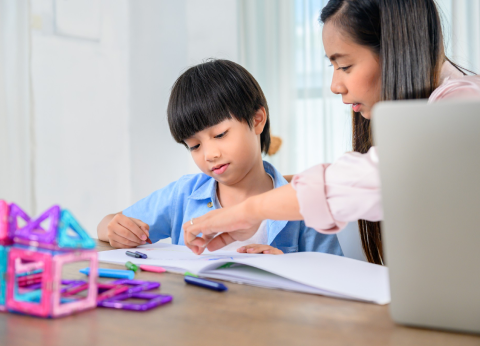
What Is Logic Training for Children?
Definition and Background
Logic training for children refers to activities specifically designed to develop children's logical thinking skills, with the goal of improving their reasoning, problem-solving, and critical thinking abilities. Through logic games, story-based scenarios, and real-life problems, children learn fundamental concepts such as logical reasoning, classification, sequencing, and cause-and-effect relationships.
What Does "Logic Training for Children" Mean?
Logic training for children is a systematic learning process designed to help children develop logical reasoning and critical thinking skills. Through a variety of engaging activities and games, children are encouraged to think logically, learn how to solve problems, and make reasonable decisions.
The Importance of Logic Training for Children's Development
Logic training has a significant impact on children's development. It can not only improve academic performance but also help children solve problems, make decisions, and think critically in everyday life. Logical thinking is an essential part of modern education and plays an important role in children's overall development.
Main Course Objectives
- Develop children's logical reasoning, problem-solving, and critical thinking skills: Help children learn how to analyze problems, reason through them, and develop solutions.
- Promote the development of language and mathematical thinking skills: Logic training can improve children's language comprehension and mathematical thinking, both of which are essential for academic success.
Core Content of Logic Training for Children
Basic Logic Concepts
- Logic training with shapes, colors, and classification: Help children learn how to classify objects and understand the characteristics of different shapes, colors, and sizes.
- Logic games and problem solving for cognitive development: Through logic games and problem-solving tasks, children can practice logical thinking and improve their cognitive abilities.
Applying Logical Thinking
- How to apply logical thinking to everyday life: Help children use logical thinking in different everyday situations, such as organizing objects and making choices.
- Using stories and situational problems to stimulate thinking: Stories and situational problems can encourage logical thinking and help children practice reasoning in real-life contexts.
Age-Based Course Levels
Logic course design for children of different ages: Courses should be designed according to children's developmental needs at different ages. For children aged 3–5, the focus is on basic logic games; ages 6–8 introduce more reasoning and problem-solving skills; ages 9–12 focus on more complex logical thinking exercises.
Methods and Techniques for Logic Training for Children
Game-Based Learning
Using logic games to help children understand logical principles: Games are one of the most engaging ways for children to learn. Through puzzles, number games, board games, and other activities, children can learn logical rules while having fun.
Combining Logic Training with Everyday Life
Integrate logic training into everyday situations so children can apply the logical thinking skills they have learned to activities such as organizing objects and planning activities.
Story-Based and Situational Guidance
Using story-based scenarios for reasoning practice: Stories can guide children through reasoning exercises and teach them to analyze problems from multiple perspectives.
Using Role-Playing and Puzzle Games
Role-playing and puzzle games can help children connect logic training with everyday challenges and strengthen their thinking skills.
Tools and Resources for Logic Training for Children
Logic Games and Learning Tools
Recommended logic games and learning materials include building blocks, number cards, and shape cards. These games and materials can help children understand logical concepts and improve their logical reasoning skills.
Combining Physical Learning Materials with Digital Tools
Combining digital tools with physical learning materials can make learning more interactive and help children understand logical concepts more easily.
Online Learning Platforms
Introduction to high-quality online logic courses and learning resource platforms: Logic learning apps, online courses, and similar platforms provide a variety of logic games and exercises, allowing children to practice logical thinking at home.
Frequently Asked Questions (FAQ)
| Question | Answer |
|---|---|
| How Do You Start Logic Training for Children? | When starting logic training, choose activities appropriate for the child's age and developmental stage. Begin with simple logic games and gradually increase the level of difficulty. |
| Can Preschool Children Start Logic Training? | Yes, preschool children can begin developing logical thinking through simple logic games and activities, such as shape classification and basic reasoning games. |
| How Can Children Enjoy Logic Training Without Getting Bored? | Design engaging games and story-based scenarios to make learning both challenging and enjoyable. Role-playing, puzzles, and other interactive activities can encourage active participation and increase children's motivation to learn. |
| What Are Effective Methods for Logic Training for Children? | Effective methods include game-based learning, problem-solving activities, and situational reasoning. A variety of activities can help children strengthen their logical thinking skills. |
Conclusion
Logic training for children is essential for cognitive development and everyday problem-solving skills. By combining engaging games, stories, and real-life problems, logic training not only helps children develop logical thinking but also encourages enthusiasm for learning and creativity. Effective logic training can build a strong foundation for children's future learning.
When designing logic training courses for children, the content should be adjusted according to their age, interests, and needs while remaining engaging and challenging. Parents and teachers should actively participate by providing support and encouragement, helping children strengthen their logical thinking skills in a relaxed and enjoyable learning environment.
-
Mama Duoduo
The course is fun and engaging, helping Duoduo enjoy learning through play. Logic training has improved her focus and learning ability, allowing her to complete schoolwork and exams independently with confidence. -
Yahan’s Mom
Logic Bear goes beyond traditional learning by building logical thinking, confidence, self-discipline, and problem-solving skills. Children learn to think independently, manage their time, and confidently handle real-life challenges. -
Ruirui’s Mom
Ruirui started Logic Bear at age 2½. After a year of training, his memory improved significantly, and he became much more talkative. He also developed strong learning habits and self-discipline. -
Maodou’s Mom
Logic Bear inspires Maodou to think in new ways and stay organized, diligent, and self-disciplined. With the teacher’s guidance, Maodou learns to approach problems from different perspectives, explore answers, and consider multiple possibilities. -
Xiwen’s Dad
Xiwen enjoys learning and challenges, even inviting his dad to explore learning tools together at home. Since joining Logic Bear, his speech, expression, and logical thinking have improved significantly, making his communication clearer, more organized, and mature for his age. -
Zelin’s Mom
Logic Bear’s thinking-based approach transformed Zelin’s learning journey. After starting elementary school, he showed outstanding abilities in language and math and also reached Level 4 in Go, demonstrating remarkable academic growth.